In precision manufacturing, the quality of small components can have a significant impact on the performance and reliability of the final product. The Etched Spring from YanMing is a precision metal component manufactured using advanced chemical etching technology. This process enables the production of springs with complex geometries, tight tolerances, and burr-free edges—qualities that are difficult to achieve with traditional stamping or wire-forming methods. This article examines the features, specifications, and applications of etched springs, and why they have become a preferred solution for industries requiring high-precision metal components.
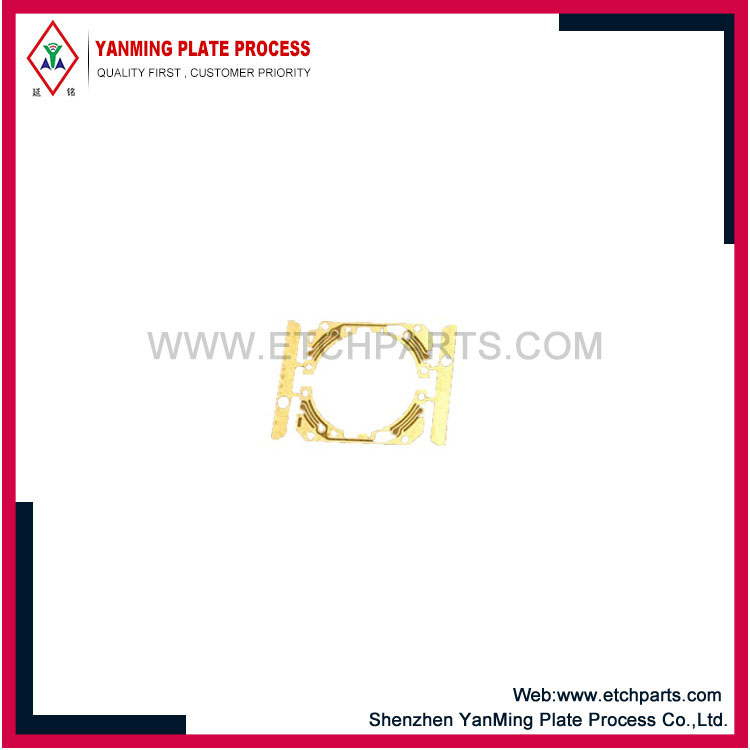
The Evolution of Precision Metal Spring Manufacturing
Springs are fundamental components in countless mechanical and electronic devices, from automotive systems and medical instruments to consumer electronics and industrial equipment. Traditionally, springs have been manufactured through wire winding or stamping processes. While these methods are effective for many applications, they have inherent limitations when it comes to producing very small, complex, or high-tolerance components. The Etched Spring offers an alternative approach that overcomes these limitations.
Through chemical etching, it is possible to produce springs with intricate shapes, precise geometries, and tight tolerances that would be difficult or costly to achieve with conventional methods. YanMing has been a precision manufacturer since 2006, operating a 20,000-square-meter etching facility in Jiangxi, China, equipped with automatic etching production lines. Their expertise in metal etching has made them a trusted supplier of springs for automotive, electronics, and other industries.
What Makes Etched Springs Different?
The etching process offers distinct advantages over traditional spring manufacturing methods, particularly for applications requiring high precision and complex geometries. Below is a comparison of key characteristics.
|
Characteristic
|
Etched Spring
|
Traditional Stamping / Wire Forming
|
|
Design Flexibility
|
High—complex shapes and patterns possible
|
Limited—constrained by tooling and forming capabilities
|
|
Precision
|
±0.01mm tolerance achievable
|
Typically ±0.05mm or wider
|
|
Burr-Free Edges
|
Yes—chemical etching leaves smooth edges
|
Often requires secondary deburring
|
|
Tooling Cost
|
Low—no expensive hard tooling required
|
High—stamping dies are costly
|
|
Lead Time
|
Short—samples in 3-5 days
|
Longer—tooling fabrication required
|
|
Thickness Range
|
0.02mm to 1mm
|
Limited by material formability
|
These characteristics make etching particularly suitable for applications where precision, design flexibility, and quick turnaround are priorities.
Technical Specifications
Below is a summary of the key specifications for the Etched Spring from YanMing.
|
Parameter
|
Specification Details
|
|
Material
|
Spring steel, brass, or other metal sheet
|
|
Thickness
|
0.02 – 1 mm (customizable)
|
|
Max Etching Size
|
400 × 600 mm
|
|
Hole Shapes
|
Hexagon, diamond, oval, round, rectangle, square, or custom
|
|
Etching Precision
|
Line width: 0.015mm; Aperture: 0.03mm; Tolerance: ±0.01mm
|
|
Lead Time (Samples)
|
3-5 days
|
|
Lead Time (Mass Production)
|
Within 7 days
|
|
Additional Services
|
Half-etched logo, welding, shaping, polishing, color coating, anodizing, plating, adhesive
|
These specifications demonstrate the capability to produce high-precision etched springs for a wide range of applications.
Key Features and Advantages
The Etched Spring offers several advantages that make it a practical choice for precision applications.
High Precision
The etching process enables tight tolerances down to ±0.01mm, ensuring consistent spring performance and reliable fit in assemblies. This level of precision is essential for applications where small variations in spring dimensions could affect functionality.
Design Flexibility
Because chemical etching does not require hard tooling, it is possible to produce springs with complex geometries, variable thicknesses, and intricate patterns. This design flexibility allows engineers to optimize spring designs for specific applications without being constrained by stamping or forming limitations.
Burr-Free Edges
The etching process produces clean, burr-free edges, eliminating the need for secondary deburring operations. This is particularly important for springs used in sensitive applications where burrs could cause damage to other components or affect performance.
Low Tooling Cost and Short Lead Times
Since etching does not require expensive hard tooling, initial setup costs are significantly lower than for stamping. This makes etching a cost-effective option for low-volume production, prototyping, and custom designs. Sample lead times can be as short as 3-5 days, allowing for rapid design iterations.
Material Versatility
Etching can be performed on a variety of metal materials, including spring steel, brass, and other alloys. This versatility allows customers to select the material that best suits their application requirements.
Applications Across Industries
The Etched Spring is used in a variety of industries and applications:
• Automotive – Precision springs for fuel injection systems, transmission components, and sensor assemblies.
• Consumer electronics – Springs for connectors, switches, battery contacts, and camera modules.
• Medical devices – Miniature springs for diagnostic equipment, surgical instruments, and implantable devices.
• Industrial equipment – Springs for control systems, valves, and precision machinery.
• Aerospace and defense – High-reliability springs for critical applications requiring precision and durability.
• Telecommunications – Springs for connectors and RF components.
The versatility of the product, combined with the precision and design flexibility offered by the etching process, makes it suitable for a broad range of applications.
Quality Assurance and Environmental Compliance
YanMing operates with a commitment to quality and environmental responsibility. The company's quality control system covers every stage of production, from incoming material inspection to finished product testing. Position settings for quality control are strictly defined, with each position following detailed job responsibilities and inspection procedures.
The company holds ISO 9001 quality management certification, reflecting its commitment to consistent quality and continuous improvement. The factory is authorized with an etching production license, and all wastewater treatment processes meet environmental protection requirements. This is an important consideration for customers sourcing from China, as stricter environmental regulations have led to the closure of some unlicensed etching operations.
The company's vertically integrated manufacturing base, spanning over 20,000 square meters, provides full control over the production process, ensuring consistent quality and reliable delivery.
Frequently Asked Questions (FAQ)
Q: What materials can be used for etched springs?
A: Common materials include spring steel and brass. Other metal sheets can be used based on specific application requirements.
Q: What is the maximum size for an etched spring?
A: The maximum etching size is 400 × 600 mm. Custom sizes may be available upon request.
Q: What precision can be achieved with etching?
A: Etching can achieve line widths of 0.015mm, apertures of 0.03mm, and tolerances of ±0.01mm.
Q: How long does it take to produce samples?
A: Sample lead time is typically 3-5 days.
Q: Is the etching factory licensed and compliant with environmental regulations?
A: Yes. YanMing holds an etching production license and all wastewater treatment processes comply with environmental protection requirements.
Q: What other products does YanMing supply besides etched springs?
A: YanMing also manufactures acrylic/glass panels, nameplates, panel graphic overlays, and die-cut parts.
Conclusion
The Etched Spring offers a combination of precision, design flexibility, and cost-effectiveness that makes it a practical choice for industries requiring high-quality metal components. The chemical etching process enables tight tolerances, burr-free edges, and complex geometries that are difficult to achieve with traditional manufacturing methods. With over 17 years of experience, a fully licensed etching facility, and ISO 9001 certification, YanMing provides a reliable source for precision etched springs. For inquiries, technical specifications, or to discuss custom requirements, our team is available to provide detailed information and competitive quotations, please contact us!
 English
  Español
  Português
  русский
  Français
  日本語
日本語  Deutsch
  tiếng Việt
  Italiano
  Nederlands
  ภาษาไทย
  Polski
  한국어
한국어  Svenska
  magyar
  Malay
Malay  বাংলা ভাষার
  Dansk
Dansk  Suomi
Suomi  हिन्दी
  Pilipino
  Türkçe
  Gaeilge
  العربية
  Indonesia
  Norsk
Norsk  تمل
تمل  český
český  ελληνικά
  український
  Javanese
  فارسی
فارسی  தமிழ்
தமிழ்  తెలుగు
  नेपाली
  Burmese
  български
  ລາວ
ລາວ  Latine
  Қазақша
  Euskal
  Azərbaycan
  Slovenský jazyk
  Македонски
  Lietuvos
  Eesti Keel
  Română
  Slovenski
  मराठी
मराठी  Srpski језик


